Copper Barware Guide: What to Buy for a Safe Home Bar
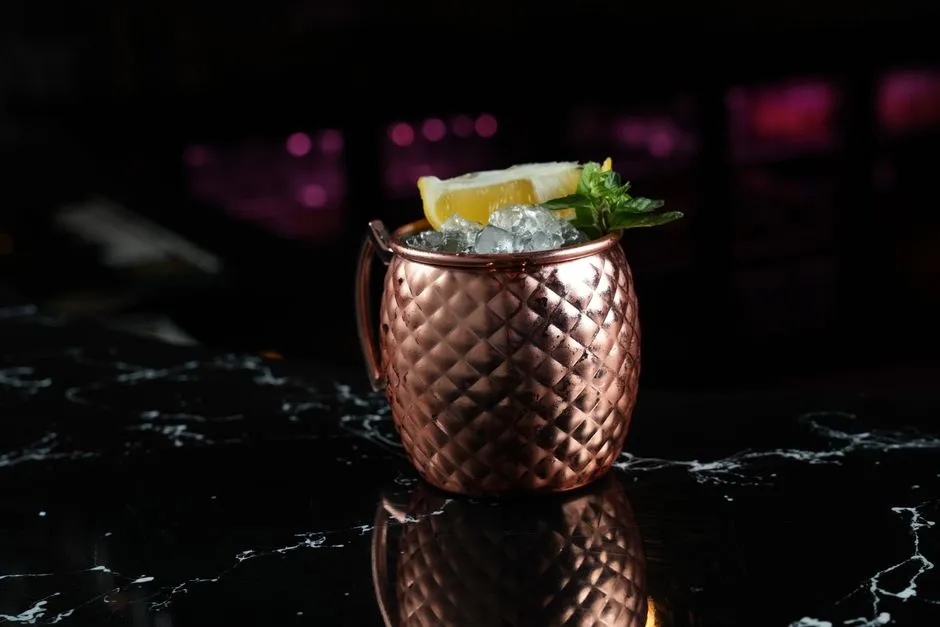
- What Copper Barware Actually Means (and What Belongs in Your First Order)
- The Quick Verdict: A Safe Copper Bar in Four Steps
- How We Evaluate Copper Barware
- Pick 1: Lined Moscow Mule Mugs — The Foundation
- Pick 2: A Copper Jigger — Cheap, Useful, Transformative
- Pick 3: Bar Spoon and Strainer — The Stirred-Drink Kit
- Pick 4: The Copper Shaker — Buy Last, Buy Honest
- A Word on Copper Straws
- Comparison Table: What to Buy, in What Order
- Sets vs. Building Piece by Piece
- Caring for Copper Barware (the Two-Minute Version)
- The Bottom Line
What Copper Barware Actually Means (and What Belongs in Your First Order)
Copper barware covers everything copper on a bar cart: Moscow mule mugs, julep cups, shakers, jiggers, strainers, bar spoons, straws, and ice buckets. Split that list in two and the whole category gets simple. Anything that holds or sits in a drink — mugs, julep cups, straws — is copper drinkware, and it follows the lining rule below. Anything that only touches a drink for a second or two is a tool, and it doesn't. The short version of this guide: buy lined solid-copper mugs first, add a copper-plated jigger and bar spoon second, and treat everything else as optional upgrades you add once you know what you actually mix.
The safety rule that governs every purchase is simple. Copper is a reactive metal, and unlined copper should never sit in prolonged contact with acidic food or drink. A Moscow mule — lime juice plus ginger beer — is acidic, so any mug, julep cup, or straw that will spend time in one needs a food-safe lining or interior, typically nickel or stainless steel. Tools that touch a drink for seconds (jiggers, spoons, strainers) are a different, lower-stakes question, which is why they're usually copper-plated stainless and perfectly fine that way.
Get those two ideas straight — lining for drinkware, plating is fine for tools — and copper barware stops being confusing and starts being one of the best-looking, best-performing categories on a home bar.
The Quick Verdict: A Safe Copper Bar in Four Steps
If you want the copper bar cart essentials without the essay:
- First: two to four lined, solid-copper mule mugs. This is the piece copper does better than nearly any other barware material — it frosts fast and holds cold. Our full roundup of the best Moscow mule mugs covers specific picks.
- Second: a copper-plated jigger. Accurate measuring improves every drink you make, and a jigger is the cheapest way into the copper look.
- Third: a bar spoon and Hawthorne strainer in copper finish. These two round out stirred drinks — mules, but also copper-cart-worthy old fashioneds and negronis.
- Fourth (optional): a copper-finished shaker. Buy this only if you actually shake drinks; it's the most expensive tool and the least necessary for a mule-centric bar.
Everything else — julep cups, ice buckets, copper straws, garnish picks — is genuinely nice but belongs in the "later" pile. Julep cups, though, are drinkware, not decor: if you plan to actually drink out of one, hold it to the same lining standard as a mule mug.
How We Evaluate Copper Barware
Every recommendation on Koppr runs through the same filter, and barware gets an extra safety layer:
- Lining and food contact. Anything that holds a drink — or sits in one — gets checked for a food-safe interior first. No exceptions, no matter how pretty bare copper looks.
- Solid copper vs. plated. For mugs, solid copper with a lining is the durable choice; thin copper plating over steel can wear through and look shabby fast. For tools, plated stainless is the sensible norm.
- Gauge and build. Thicker copper dents less and feels better in hand. Seams, handle rivets or welds, and rim finishing tell you whether a piece survives regular use.
- Maintenance honesty. Copper tarnishes. Every piece here needs occasional polishing, and we say so rather than pretending it stays mirror-bright on its own.
Pick 1: Lined Moscow Mule Mugs — The Foundation
Why this comes first. The mule mug is the reason copper barware exists as a category. Copper's high thermal conductivity means the mug itself goes frosty within moments of ice hitting it, and that cold rim is a real part of the drink. A well-made mug is also the piece guests notice.
What to look for:
- Solid copper, not plated, with a nickel or stainless interior lining. Check listings carefully — plenty of inexpensive mugs are unlined, and sellers don't always make it obvious.
- Around 16 oz capacity, which fits a standard mule build with room for ice.
- A riveted or well-welded handle. Handles attached with a dab of solder are the first thing to fail.
- Reasonable weight. A mug that feels like a soda can is too thin to survive years of ice and washing.
A note on vintage and tin-lined vessels: tin is a traditional, food-safe lining, but it's soft and it wears. If a tin lining is worn to the point that copper shows through on the interior, or dark specks appear, stop using that piece for drinks until it's professionally relined. And because tin melts at around 450°F / 230°C, never heat an empty tin-lined vessel — no warming a tin-lined piece on a stove or setting it near a burner to dry.
Unsure about a mug you already own? Our explainer on whether copper mugs are safe to drink from walks through the lining question in detail.
Worth knowing: lined mugs cost more than the bare-copper novelty versions — typically somewhere in the range of $15–$40 per mug for solid, lined construction, versus often under $10–$12 for thin unlined ones. That premium is the entire point. Lined mugs are also almost always hand-wash only; a dishwasher's detergent and heat will darken the copper and can stress the lining.
Pick 2: A Copper Jigger — Cheap, Useful, Transformative
Why it earns the second slot. Nothing improves home cocktails faster than measuring. A double-sided jigger (commonly 1 oz / 2 oz, often with interior lines for smaller pours) makes every drink repeatable. Copper-finished jiggers are inexpensive, and because a jigger touches liquid for only a second or two, plated construction is completely appropriate here.
What to look for: clearly marked interior measurement lines, a stainless body under the copper finish, and a shape you can grip with wet hands. Japanese-style tall jiggers pour more precisely; classic hourglass shapes are easier to find in copper finishes.
Worth knowing: copper plating on tools lives a hard life. Citrus, repeated washing, and clanking around a bar drawer will dull and eventually wear the finish, especially on edges. That's cosmetic, not a safety issue — but if you want tools that look new for years, brushed stainless honestly ages better.
Pick 3: Bar Spoon and Strainer — The Stirred-Drink Kit
Why they matter. A mule is technically a built drink, but the moment your copper cart hosts stirred cocktails — and it will — you need a long bar spoon and a Hawthorne strainer. Copper-finished versions of both are widely available and complete the visual set.
What to look for: a bar spoon around 11–12 inches with a tight spiral shaft (it makes stirring smoother), and a strainer with a snug, flexible spring that fits your mixing vessel. As with jiggers, these are plated tools and that's fine.
Worth knowing: the spring on a Hawthorne strainer is usually plain stainless even on copper-finished models, so the look isn't perfectly uniform. And cheap copper-finish spoons sometimes skip the weighted end that makes stirring feel balanced — check for it.
We cover specific shakers, jiggers, and strainers in our roundup of the best copper bar tools.
Pick 4: The Copper Shaker — Buy Last, Buy Honest
Why it's optional. Shakers are for citrus-forward, egg-white, and cream drinks. If your copper bar is mule-and-stirred-drinks territory, a shaker mostly sits there looking good — which, to be fair, copper does exceptionally well.
What to look for: most copper shakers are copper-plated stainless, which is exactly what you want — the interior stays stainless, so acidic citrus juice never touches copper. Boston shakers (two-piece) are more versatile; cobbler shakers (three-piece with built-in strainer) are friendlier for beginners.
Worth knowing: copper-plated shakers show wear faster than any other bar tool because shaking is violent and wet. Expect the finish on contact points to dull with regular use. A shaker with a bare copper interior is the one configuration to avoid entirely — shaking citrus in unlined copper is exactly the acid-contact scenario the safety rule exists for.
A Word on Copper Straws
Copper straws get sold as a cheap, photogenic add-on, and they're the piece most often gotten wrong. A straw isn't a tool that dips in and out of a drink — it stands in an acidic mule for the entire time you're drinking it, which is prolonged bare-copper-to-acid contact by any definition. Treat straws as drinkware, not accessories.
Buy only straws with a food-safe interior: stainless steel with a copper finish or plating on the outside, or copper with a documented food-safe lining. Skip anything described simply as "solid copper" with no mention of a lining or interior material, and skip anything where the seller can't say what the inside is made of. A cleaning brush should come in the box — a straw you can't scrub through is a straw you can't verify is clean.
Comparison Table: What to Buy, in What Order
| Piece | Priority | Construction to buy | Typical price range | Acid-contact risk | Key check |
|---|---|---|---|---|---|
| Mule mugs (each) | Essential | Solid copper, lined | ~$15–$40 | High — must be lined | Nickel/stainless lining, riveted handle |
| Jigger | Essential | Copper-plated stainless | ~$8–$20 | Low (brief contact) | Interior measure lines |
| Bar spoon | High | Copper-plated stainless | ~$8–$15 | Low | Weighted end, tight spiral |
| Hawthorne strainer | High | Copper-plated stainless | ~$10–$20 | Low | Snug spring fit |
| Shaker | Optional | Copper-plated stainless | ~$20–$45 | Low if interior is stainless | Never bare-copper inside |
| Julep cups (each) | Optional | Solid copper, lined | ~$20–$45 | High — must be lined | Lined interior if you drink from it |
| Ice bucket | Optional | Lined or double-wall | ~$25–$60 | Low (ice only) | Lid and tongs included |
| Copper straws | Optional | Copper-plated stainless, or lined — never bare copper | ~$10–$20/set | High — sits in the drink | Stated stainless/food-safe interior, cleaning brush |
Prices are honest editorial ranges for decent-quality pieces, not quotes — thin novelty versions cost less and premium makers cost more.
Sets vs. Building Piece by Piece
A boxed copper barware set is tempting: four mugs, shaker, jigger, spoon, sometimes straws, one purchase. Sets can be good value, but apply two filters:
- The mugs carry the set. If the set's mugs are unlined or plated steel, walk away regardless of how nice the tools look. You're mostly paying for the mugs.
- Count the filler. Straw sets, garnish picks, and coasters pad the piece count cheaply. Judge a set on mugs + shaker + jigger and treat the rest as free extras — and if straws are included, check their interior spec before you use them.
The best copper barware sets are usually the ones with the fewest pieces and the most honest lining information, not the ones advertising the biggest count. Copper bar accessories — coasters, garnish picks, tongs, a small tray — are worth adding once the core kit is settled, and they overlap heavily with the copper pieces we cover in our guide to copper kitchen accents.
Building piece by piece costs a little more in total but lets you put the money where it matters — lined, solid mugs — and go inexpensive on plated tools. For most people starting a copper bar, that's the smarter route.
Caring for Copper Barware (the Two-Minute Version)
Copper barware asks for modest, consistent care:
- Hand wash promptly with mild soap and a soft cloth. No dishwashers, no steel wool.
- Dry immediately. Water spots become tarnish patterns.
- Polish occasionally with a purpose-made copper polish or the classic pantry method — the mild acid in lemon juice or vinegar plus a little salt dissolves the tarnish layer. Rinse and dry thoroughly afterward. No polish "seals" copper permanently; tarnish always returns, and that's normal.
- If you ever see green residue (verdigris), clean it off completely before the piece touches a drink again. Verdigris is not food-safe.
- If a mug's lining wears through and copper shows on the interior, retire it from drink duty. It can live on your cart as decor, but its serving days are done.
For step-by-step methods that protect linings while they brighten the outside, see our guide to cleaning copper mugs.
The Bottom Line
Copper barware rewards buying in the right order: lined solid-copper mugs first, because that's where safety and performance both live; inexpensive plated tools second, because brief contact makes plating a non-issue; showpieces last, once you know your bar's actual habits. Check every piece that holds a drink — mugs, julep cups, straws — for a food-safe interior, expect a little polishing as part of ownership, and a copper bar cart will out-look and out-chill just about anything else in the room. The plated tools will show their years eventually; the lined mugs, cared for, are the part that sticks around.