Buying Guides
How to Buy Vintage Copper Cookware: A Field Guide to Old Pots Worth Restoring
Buy vintage copper by weight and lining, not shine. A pan worth restoring is heavy for its size — roughly 2mm of copper or more, with 2.5–3mm the vintage…
Judge cooking copper by lining type and condition first, then gauge, construction, and finish. Decorative copper can be thin or unlined; cookware and drinkware need to be evaluated for their intended use.
Buy vintage copper by weight and lining, not shine. A pan worth restoring is heavy for its size — roughly 2mm of copper or more, with 2.5–3mm the vintage…
When buying copper cookware, check three things in order: lining, thickness, construction.
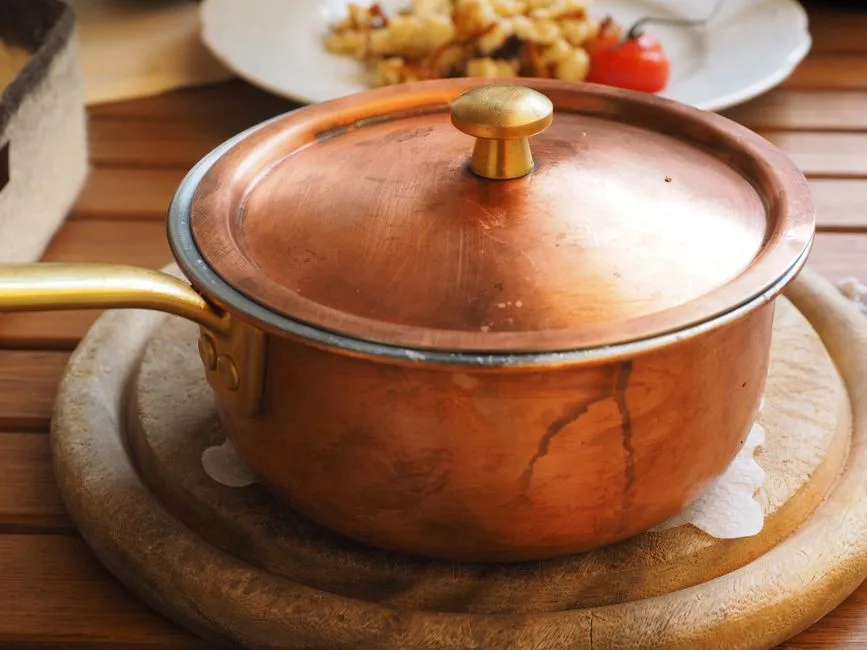
Cooking copper should be at least 2mm thick, with 2.5mm as the sweet spot used by benchmark makers like Mauviel's heavier lines and Falk Culinair.
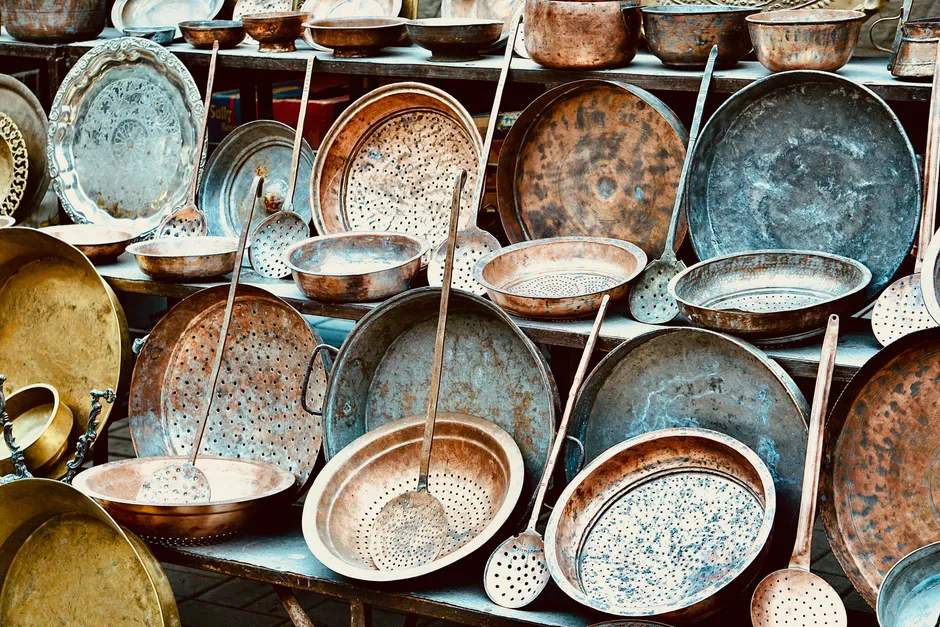
Hammering does not meaningfully change how copper cookware cooks — heat performance is set by the copper's thickness, purity, and lining, not its surface…